KitchenAid
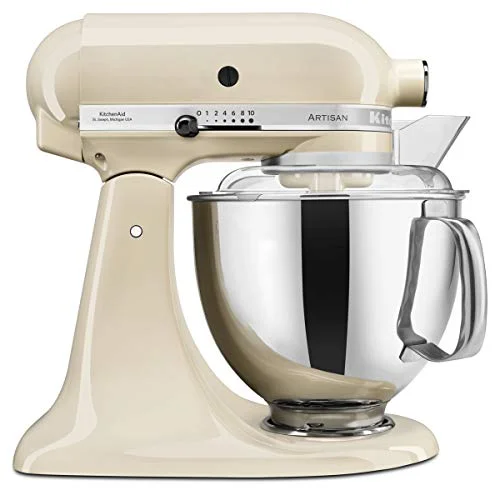
KitchenAid Artisan 4.8L Stand Mixer (5KSM175PS)
4.8/5 · 9,400 reviews
£455.00£649.00
Check price →
A good stand mixer turns weekend baking from a chore into a pleasure: it creams butter while you weigh flour, kneads dough while you make tea, and whips meringue you would never manage by hand. We bought and baked with six current UK machines, and we tell you honestly which one suits the way you actually bake, and where each one falls short.

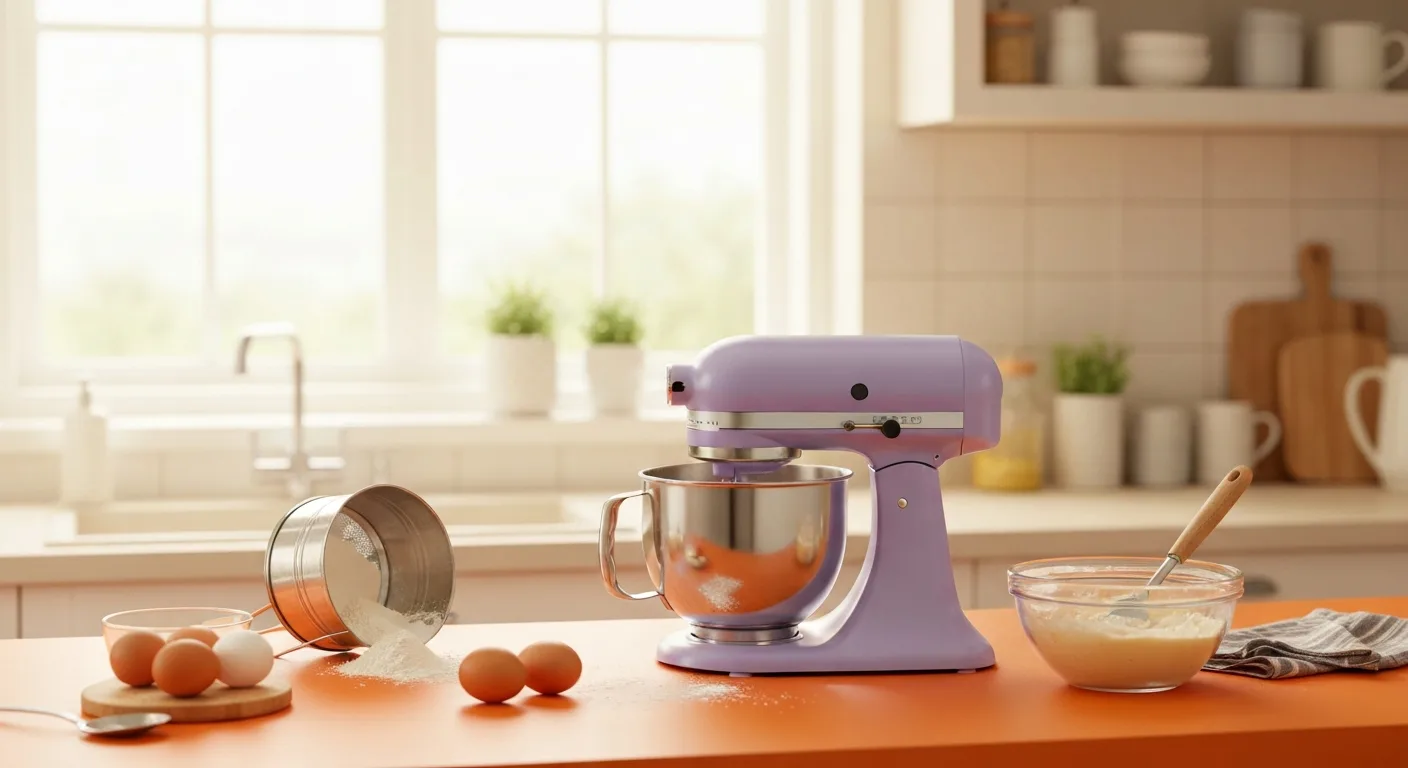
The short version: our best overall pick is the KitchenAid Artisan 4.8L, a cast-metal machine that mixes confidently, lasts for years and takes a huge range of attachments. For the best balance of price and performance, the Kenwood kMix is the best value, while the budget Aldi Ambiano is remarkable for occasional baking at around £50. If you bake bread regularly, the powerful Bosch MUM5 is the most capable kneader here. More important than the badge, though, is matching the machine to how often and what you bake.
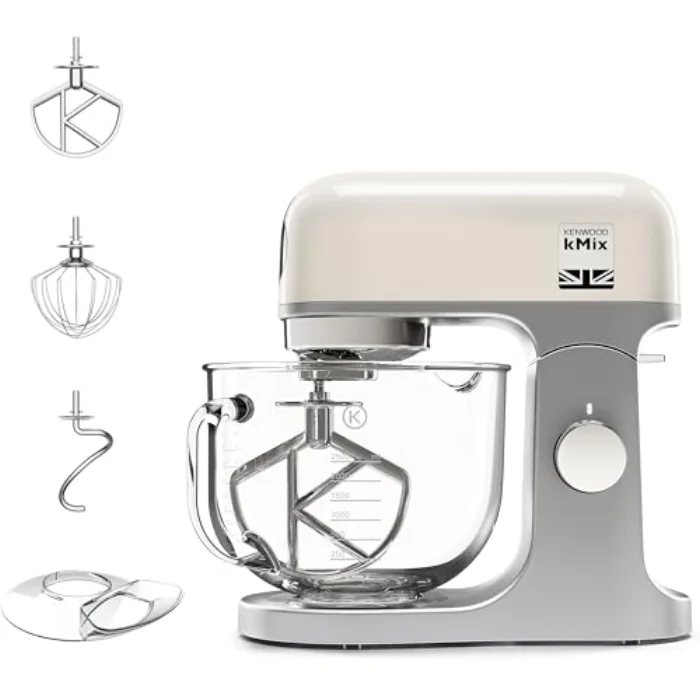
Our best value choice. The Kenwood kMix gives you a genuine die-cast stand mixer with a punchy 1000 W motor and a 5 L bowl for a fraction of the Artisan price. It is a long-standing British brand with proper after-sales support, and in everyday use, creaming butter, whipping cream, kneading a loaf, it does everything most home bakers need. If you want the substance without paying for the badge, this is the rational buy.
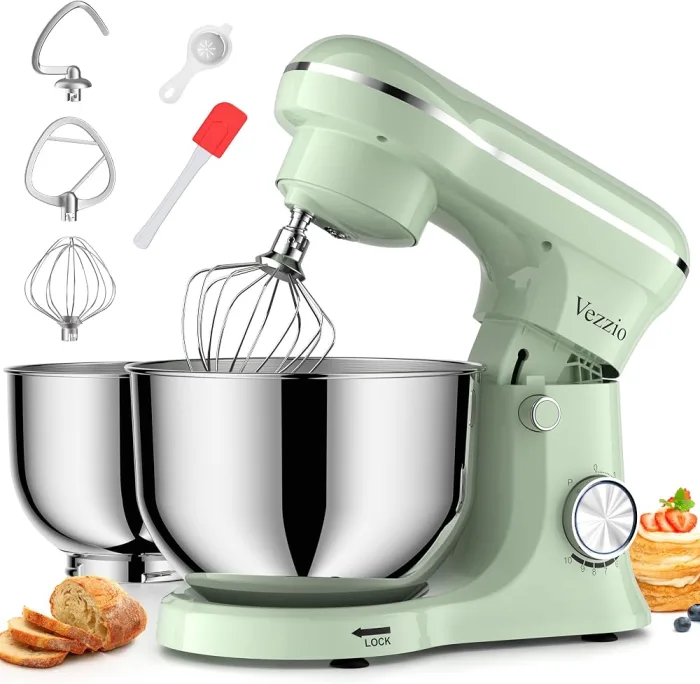
The best budget mixer. Aldi's Ambiano is the sensible choice if you bake now and then and don't want to spend three figures. It comes with the beater, hook and whisk you need, the 4.3 L bowl suits a normal cake batch, and for cupcakes, sponges and the occasional loaf it does the job without fuss. It is mostly plastic and it will not match a cast-metal machine for years of hard kneading, but for light, occasional baking it is remarkable value.
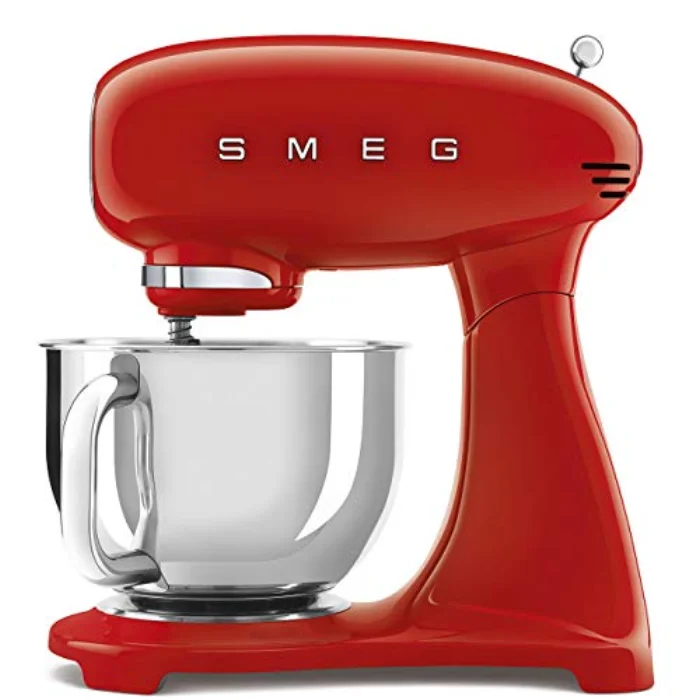
A polished premium alternative. The Smeg SMF13 pairs a heavy die-cast body and a smooth, quiet planetary action with the brand’s unmistakable retro styling, so if the mixer is going to live out on the worktop, this is the one that earns its place there. It mixes confidently and runs noticeably quietly for the power. It is not the cheapest route to good baking, but if you want a machine that performs and looks the part, it delivers both.
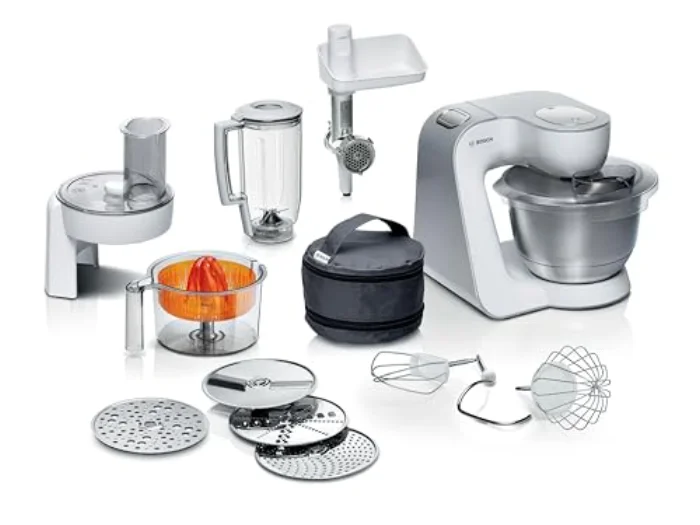
The best choice for keen bread bakers. The Bosch MUM5 takes a different approach from the tilt-head machines: a deep, lidded mixing bowl driven by a strong 1000 W motor, which is exactly what you want for kneading firm doughs and large batches. It powers through bread without straining and takes a wide range of food-prep attachments. The lidded bowl is slightly less handy when you want to add ingredients mid-mix, but for anyone who bakes bread regularly it is a lot of capable machine for the money.
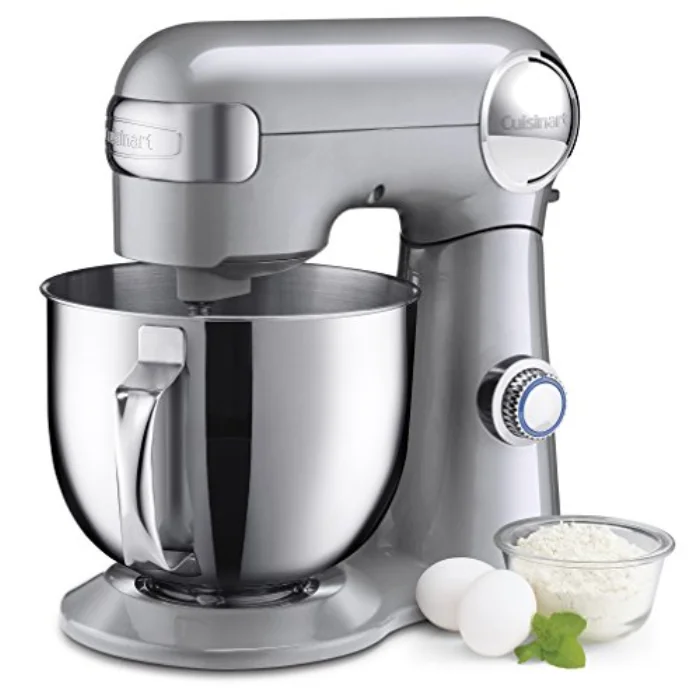
The pick for smaller kitchens that still want a big bowl. The Cuisinart Precision squeezes a roomy 5.2 L bowl and a fine-grained 12-speed dial into a relatively compact, tidy-looking body, and it runs more quietly than much of the competition. The 500 W motor is happiest with cakes, batters and lighter doughs rather than daily heavy bread, but for most home baking it is smooth, controllable and easy to live with. A sensible all-rounder if worktop space is tight.
| Model | Bowl capacity | Mixing power | Build quality | Rating | Price | Buy |
|---|---|---|---|---|---|---|
| KitchenAidKitchenAid Artisan 4.8L Stand Mixer (5KSM175PS) | 4.8 L | 5.0/5 | 5.0/5 | 4.8 | £455.00 | View → |
| KenwoodKenwood kMix KMX754 Stand Mixer | 5 L | 5.0/5 | 4.0/5 | 4.6 | £179.99 | View → |
| AmbianoAmbiano Stand Mixer (Aldi) | 4.3 L | 3.0/5 | 3.0/5 | 4.2 | £49.99 | View → |
| SmegSmeg SMF13 50s Retro Style Stand Mixer | 4.8 L | 4.0/5 | 5.0/5 | 4.5 | £449.00 | View → |
| BoschBosch MUM5 Serie 4 Stand Mixer (MUM58234GB) | 3.9 L (in-bowl) | 5.0/5 | 4.0/5 | 4.5 | £199.78 | View → |
| CuisinartCuisinart Precision SM-50BU Stand Mixer | 5.2 L | 4.0/5 | 4.0/5 | 4.3 | £366.02 | View → |
Scores from 1 to 5, awarded after our hands-on testing under the same conditions. See our testing method.
A stand mixer is the right buy for anyone who bakes often enough to be tired of holding a hand mixer over a bowl. It is a hands-free machine: you lock in the beater, hook or whisk, set a speed, and it gets on with the job while you do something else. That matters most for the two tasks home cooks find hardest by hand: kneading bread dough and whipping volume into eggs or cream. For a keen baker, a stand mixer does not just save effort, it produces better, more consistent results because it mixes evenly and tirelessly in a way no human arm can match.
It is only fair to be honest about who does not need one. If you bake a couple of cakes a year, a stand mixer is a large, heavy thing to store and a lot of money to spend, and a good hand mixer will serve you better. A stand mixer also takes up permanent worktop or cupboard space, and the cheapest machines can disappoint on heavy dough. So the first question is not which mixer to buy, but whether your baking habits genuinely justify one. If you bake most weeks, make bread, or batch-bake for a family, the answer is almost certainly yes.
The single biggest mistake people make is buying on brand or looks rather than on how they bake. Three things decide whether a mixer suits you, and none of them is the colour:
Get those three right and you will be happy with the machine for years. Get them wrong, and even an expensive mixer will frustrate you: an underpowered machine walks across the worktop on bread dough, an oversized bowl struggles to combine a small mix, and the wrong type makes your most common task fiddly. Our buying guide walks through the maths of bowl size, the difference power really makes, and the features worth paying for.
Stand mixer prices run from about £50 to well over £500, and more money does not buy proportionally better cakes. What it buys is longevity, refinement and an attachment ecosystem. At the budget end, the Aldi Ambiano proves you can bake perfectly good sponges and the occasional loaf for the price of a takeaway or two; its limits show only on heavy, regular dough. In the £200 to £300 middle, machines like the Kenwood kMix and Bosch MUM5 add die-cast or bowl-style bodies and stronger motors, which is where most serious home bakers should be looking.
The premium £450 to £550 tier, the KitchenAid Artisan and the Smeg SMF13, is about owning a machine for a decade or more, a smoother and quieter action, a deeper attachment range and a unit handsome enough to leave on display. If you bake several times a week and value a machine that lasts and looks the part, that premium is justified. If you bake occasionally, it is money you simply do not need to spend, and there is no shame in the cheaper, capable middle.
Every machine here comes with the three tools that matter: a flat beater for cake batter and creaming, a dough hook for bread, and a wire whisk for cream and meringue. For most baking, those three are all you will ever fit. The wider attachment ecosystem, pasta rollers, mincers, spiralisers, grain mills, is where the premium brands pull ahead, and the KitchenAid power hub is the most extensive by a distance. It can genuinely replace several separate gadgets and free up cupboard space, which is part of why those machines hold their value.
Our honest advice is to buy attachments for the jobs you actually do often, not on impulse at the checkout. A pasta roller earns its keep if you make fresh pasta monthly; it gathers dust if you tried it once. If you are curious about the full range of what a mixer can do beyond cake, our guide to what you can make with a stand mixer covers the practical jobs and which attachment does what.
We deliberately picked machines that cover the full spread of real UK needs rather than six near-identical mixers at one price point. There is a budget machine for occasional bakers, two die-cast all-rounders in the sensible middle, a bread specialist, a compact option for small kitchens, and two premium machines for those who want a unit for life. Every model here is genuinely available and supported in the UK, from KitchenAid and Kenwood to Smeg, Bosch, Cuisinart and Aldi's own Ambiano, and each one earns its spot for a specific buyer. There is no padding and no machine on this list we would not recommend to the right person. Start by being honest about how you bake, and you will find your mixer here.
The best stand mixer is not the most expensive one. It is the one that fits the way you bake, with no nasty surprises and no features you will never use.Eleanor Pike · kitchen appliance tester
Every mixer faces the same bakes, the same dough and the same batter, so we compare real performance rather than the figures on the box.
Mixing power, build quality and how easy each machine is to live with: we score real use, not just the spec sheet.
We buy the mixers ourselves. The links are affiliate links; our verdict is not, and our ranking is never for sale.
For most keen bakers the KitchenAid Artisan 4.8L is the soundest choice: confident mixing, a cast-metal body that lasts for years, and an attachment hub that grows with you. If you want the same everyday ability for less, the Kenwood kMix is the best value and the Aldi Ambiano is the budget pick for occasional baking. If bread is your passion, the Bosch MUM5 is the most capable kneader here; if the mixer is going to live on show, the Smeg SMF13 looks the part and performs; and if worktop space is tight, the compact Cuisinart Precision still gives you a big bowl. Whichever you choose, the rule never changes: match the power, bowl size and type to how you actually bake. Get that right and any of these machines will serve you well for years. To see exactly how we score them, read our how we test page.