Power and build: the part that decides heavy dough
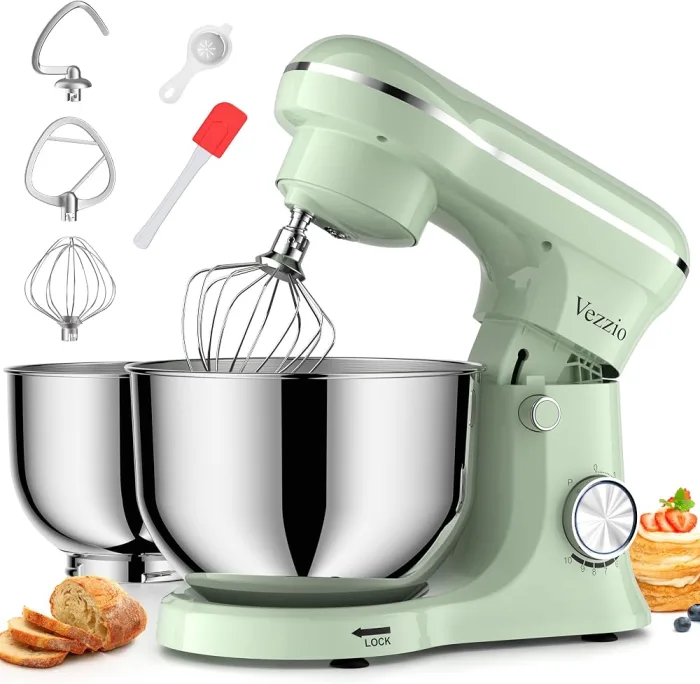
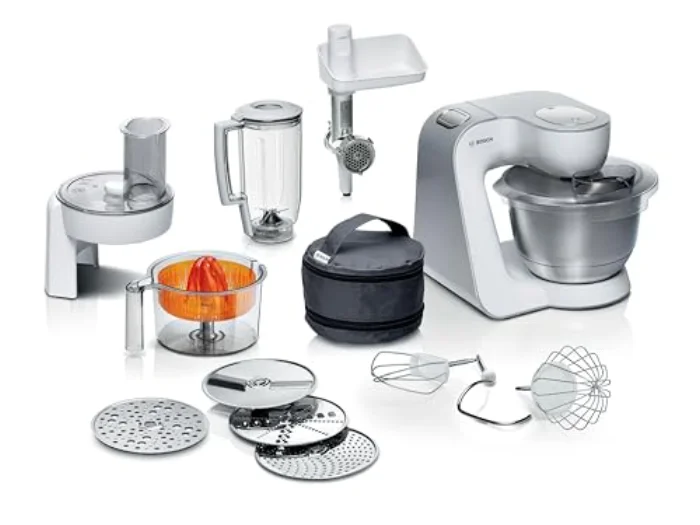
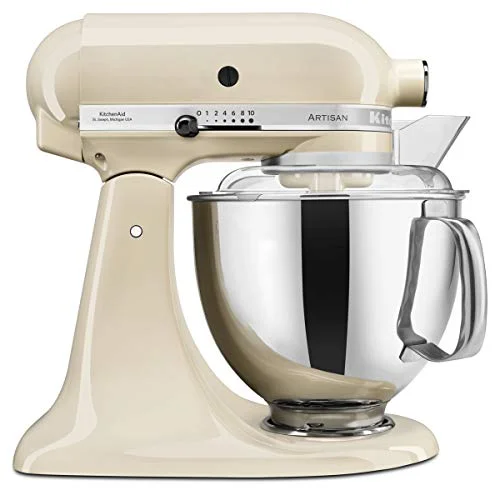
The motor and the body together decide whether a mixer can handle the toughest job you will ask of it, which for most people is bread dough. For cakes and light baking, 300 to 550 W is plenty, and even a budget machine like the Aldi Ambiano copes. For regular bread and heavy doughs, look for 600 to 1000 W, but do not stop at the wattage. Just as important is weight: a heavy, die-cast or bowl-style body stays planted while it kneads, whereas a light, plastic machine walks across the worktop and can overheat. The KitchenAid Artisan is geared for torque rather than headline watts, and its mass keeps it steady; the Bosch MUM5 pairs 1000 W with a deep bowl built for kneading. Treat power and build as a pair, never as a number on its own.
Bowl size: bigger is not always better
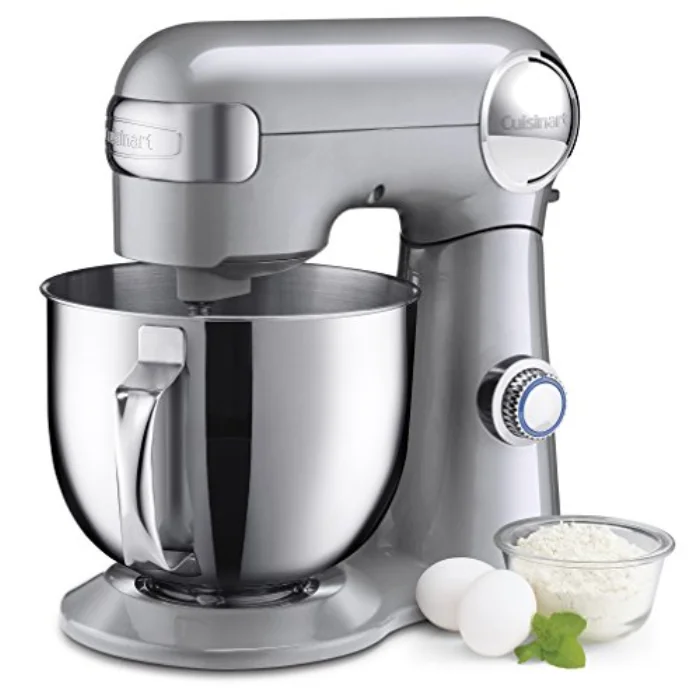
A 4.3 to 5 L bowl suits almost every home baker and handles a standard cake or a single loaf comfortably. Most of the machines here sit in that range, with the Cuisinart Precision stretching to 5.2 L in a compact body. You only need a larger 6 L-plus bowl if you regularly double recipes, bake big batches or make bread in quantity. There is a real downside to going too large, too: a very big bowl can struggle to combine a small mix, because the beater does not reach a thin layer of batter at the bottom. So size the bowl to your typical bake, not to the biggest one you might ever attempt, and you will get cleaner, more consistent results day to day.
Tilt-head vs bowl-style: choose by what you bake most
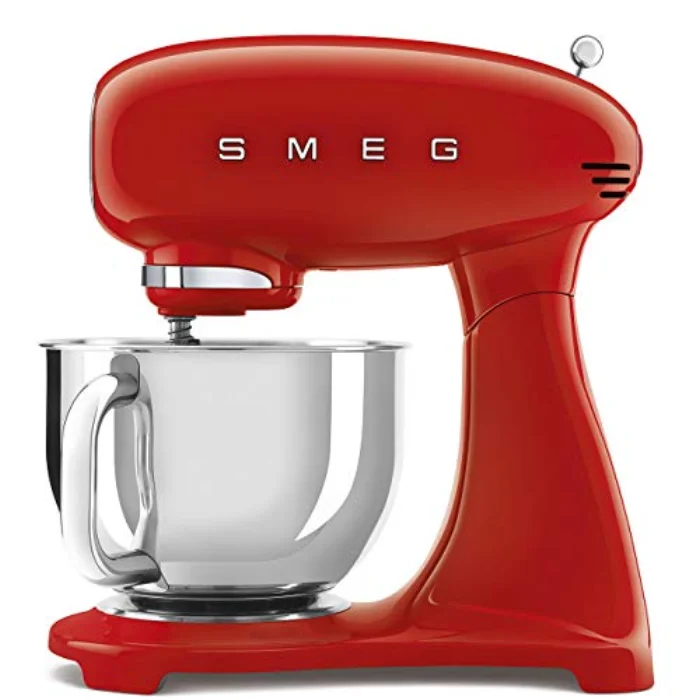
The two main designs suit different bakers. A tilt-head mixer lifts the whole head back so you can drop in the bowl, swap attachments and add ingredients easily mid-mix. It is the most convenient and versatile format for everyday baking, which is why machines like the KitchenAid Artisan and Smeg SMF13 use it. A bowl-lift or bowl-style machine, like the Bosch MUM5, raises or encloses a deeper bowl and tends to knead large, heavy doughs more comfortably, at the cost of being slightly less handy to add to mid-mix. The simple rule: choose tilt-head for versatility and convenience, and bowl-style if serious, regular bread is your main reason for buying. Neither is better in the abstract; the right one is the one that fits your most common task.
Attachments and features worth paying for
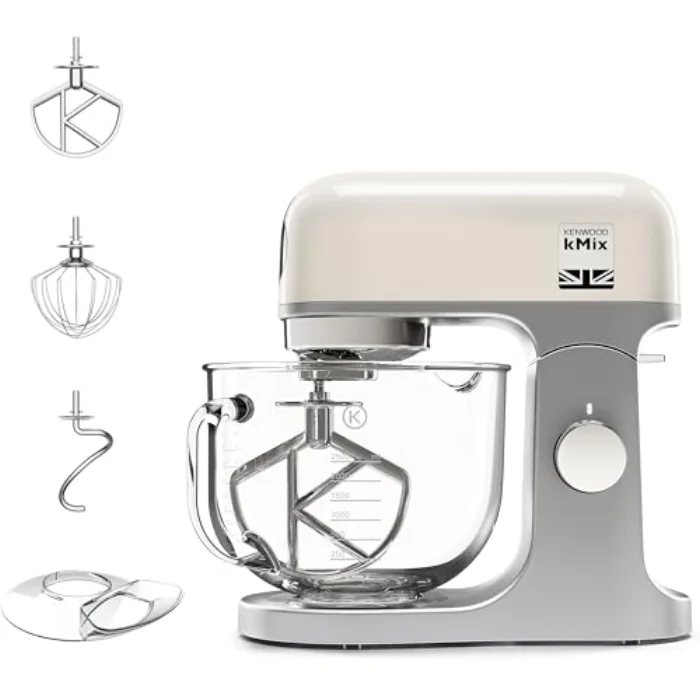
Every machine comes with the three tools that matter: a flat beater for batter and creaming, a dough hook for bread, and a whisk for cream and meringue. For most baking those three are all you will ever use. The wider ecosystem, pasta rollers, mincers, spiralisers and the like, is where premium brands pull ahead, and the KitchenAid power hub is the most extensive by far. That expandability is genuinely valuable if you will use it, because one mixer can replace several gadgets, but it is not worth paying for attachments you will only try once. Our guide to what you can make with a stand mixer covers the jobs each tool does. Beyond attachments, a splash guard with a pour spout keeps things tidy, plenty of speeds (the Cuisinart's twelve, for instance) help with delicate folding, and a heavier body almost always means quieter, steadier running.
How much should you spend?
Prices run from about £50 to over £550, and more money does not mean better cakes; it means longevity, refinement and ecosystem. At the budget end, around £50 buys an occasional-use machine for cakes and the odd loaf. The £200 to £300 middle, where the Kenwood kMix and Bosch MUM5 sit, adds die-cast or bowl-style build and real power, and is where most serious home bakers should look. The £450 to £550 premium tier is about owning a machine for a decade or more, a smoother quieter action, a deep attachment range and looks worth leaving on display. Spend in proportion to how often you bake: frequent bakers will get their money back from a premium machine that lasts, while occasional bakers should not overspend on capability they will rarely use.